
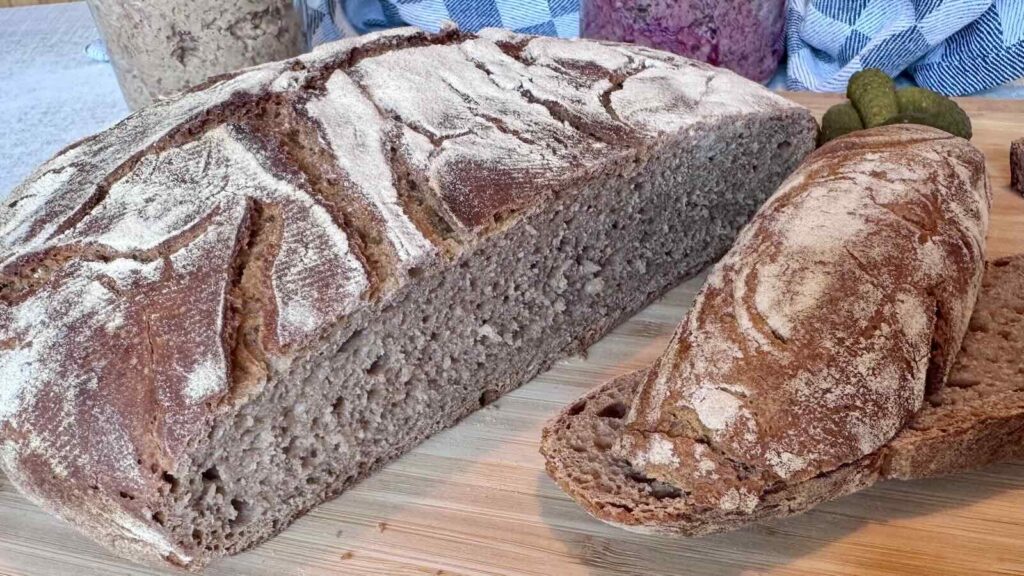
This aromatic farmer’s bread is a rustic wheat and rye loaf with a bold, crisp crust – just right if you love hearty bread.
The resting times may look like a lot at first, but the recipe is really a series of small, manageable tasks with plenty of time for the dough to develop in between. Try mixing the preferment in the evening and baking the next day.
It is lovely alongside hearty dishes such as our vegetable goulash, and equally delicious with homemade spreads. 🌱
Allergens
Contains gluten from wheat and rye.
At a glance
🍞 Makes: 1 loaf (approx. 1 kg)
🕒 Hands-on time: approx. 35 minutes
⏳ Resting and proving: approx. 13¼–15¼ hours in total
🔥 Baking time: approx. 60 minutes
🌿 Difficulty: intermediate
Allow extra time for preheating and cooling. Resting times assume a room temperature of 20–22 °C; use the described increase in volume as a guide too.
Your baking plan
- Mix the preferment → leave for 10–12 hours
- Mix the flour soaker → rest for 30 minutes
- Mix the main dough → rest for 45 minutes
- Stretch and fold → rest for another 45 minutes
- Shape and place in a proving basket or cloth-lined sieve → prove for 75 minutes
- Meanwhile, preheat the oven and pot
- Bake → 45 minutes with the lid + 15 minutes uncovered
Ingredients
Preferment
- 120 g water, at room temperature
- 1 g fresh yeast
- 165 g wholemeal wheat flour
Flour soaker
- 165 g water, approx. 45 °C
- 265 g wheat flour, German Type 1050 (a high-extraction wheat flour)
Main dough
- all of the preferment
- all of the flour soaker
- 230 g rye flour, German Type 1150 (medium rye flour)
- 135 g water, approx. 45 °C
- 15 g salt
- 15 g maple syrup
- 35 g balsamic vinegar
- 4 g fresh yeast (5 g in total, including the preferment)
You will also need
- a little flour for the work surface, proving basket or cloth, and dusting
How to make it
1. Mix the preferment
Mix 120 g room-temperature water, 1 g fresh yeast and 165 g wholemeal wheat flour by hand in a bowl. Cover with a lid or bowl cover and leave for 10–12 hours at 20–22 °C.
2. Mix the flour soaker
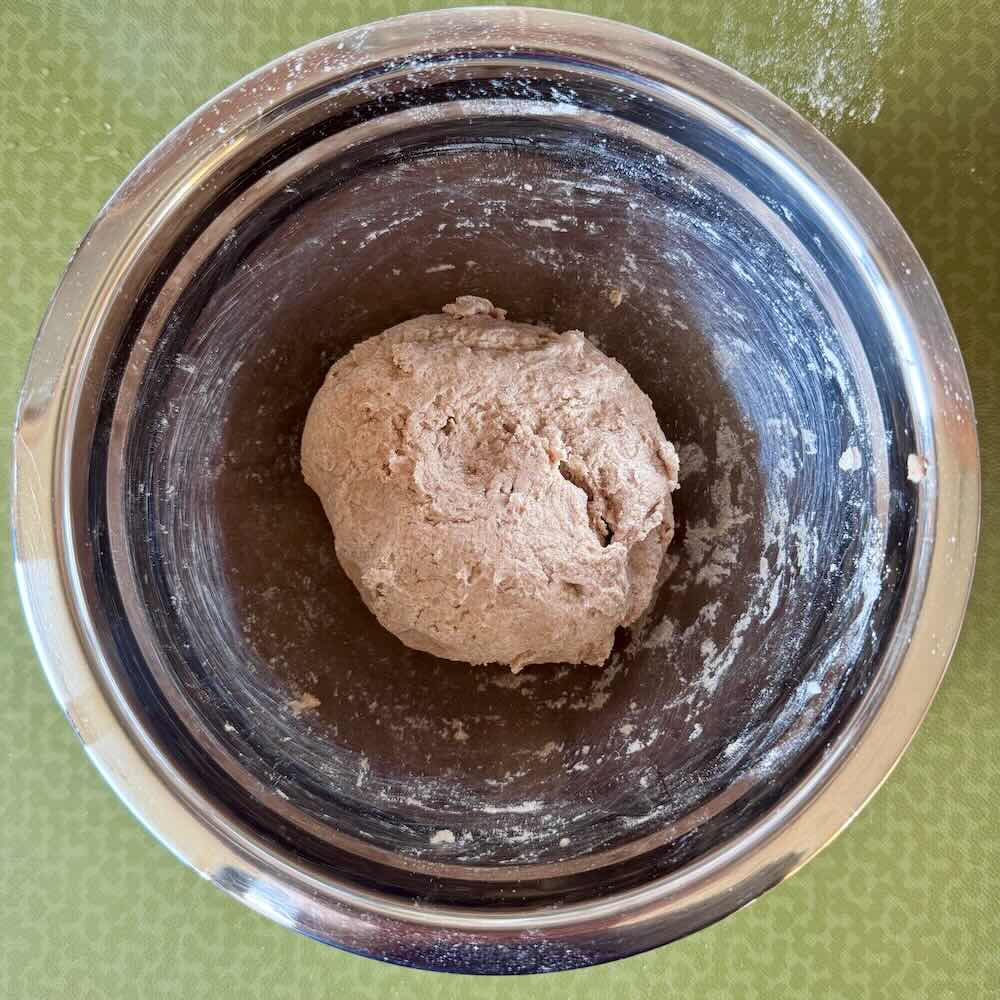
In a large bowl, mix 165 g water (approx. 45 °C) and 265 g Type 1050 wheat flour by hand until evenly combined. Cover and rest for 30 minutes at 20–22 °C.
3. Mix the main dough
Add 230 g Type 1150 rye flour, 135 g water (approx. 45 °C), 15 g salt, 15 g maple syrup, 35 g balsamic vinegar, 4 g fresh yeast and all of the preferment to the flour soaker. Mix thoroughly by hand until everything is fully incorporated. Mix the yeast with the other ingredients rather than putting it directly into the warm water. Cover and rest for 45 minutes at room temperature (20–22 °C).
4. Stretch and fold
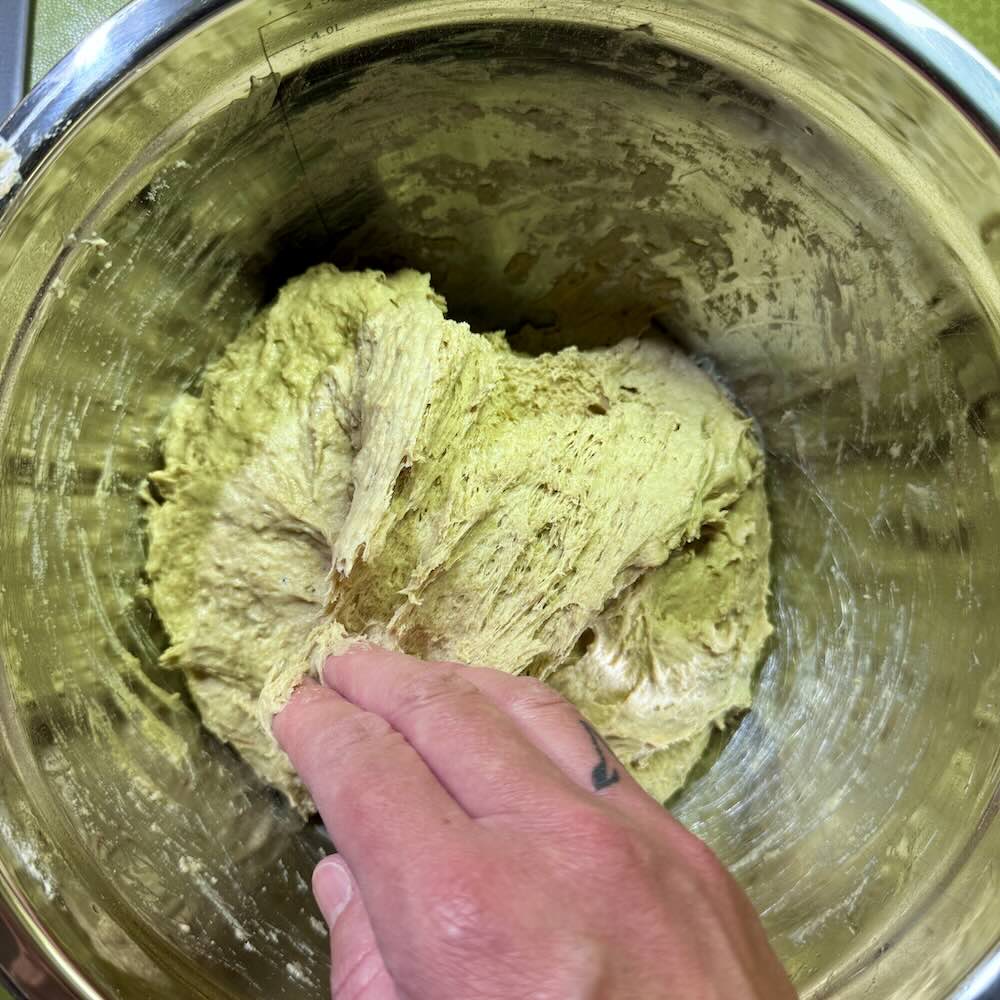
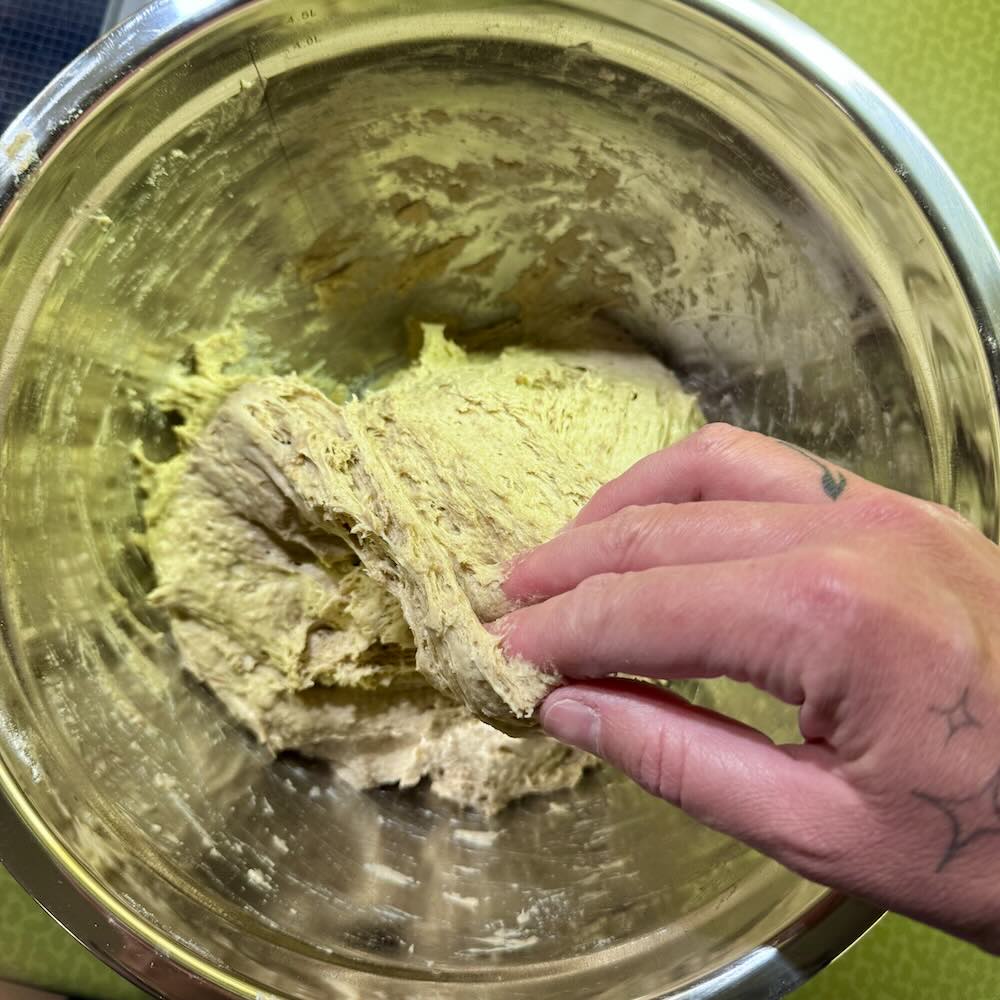
Slide your fingers under the edge of the dough. Gently lift about one third, stretch it slightly and fold it towards the opposite side. Repeat with the next third, then the final third.
5. Rest again
Cover the dough again and rest for another 45 minutes at room temperature.
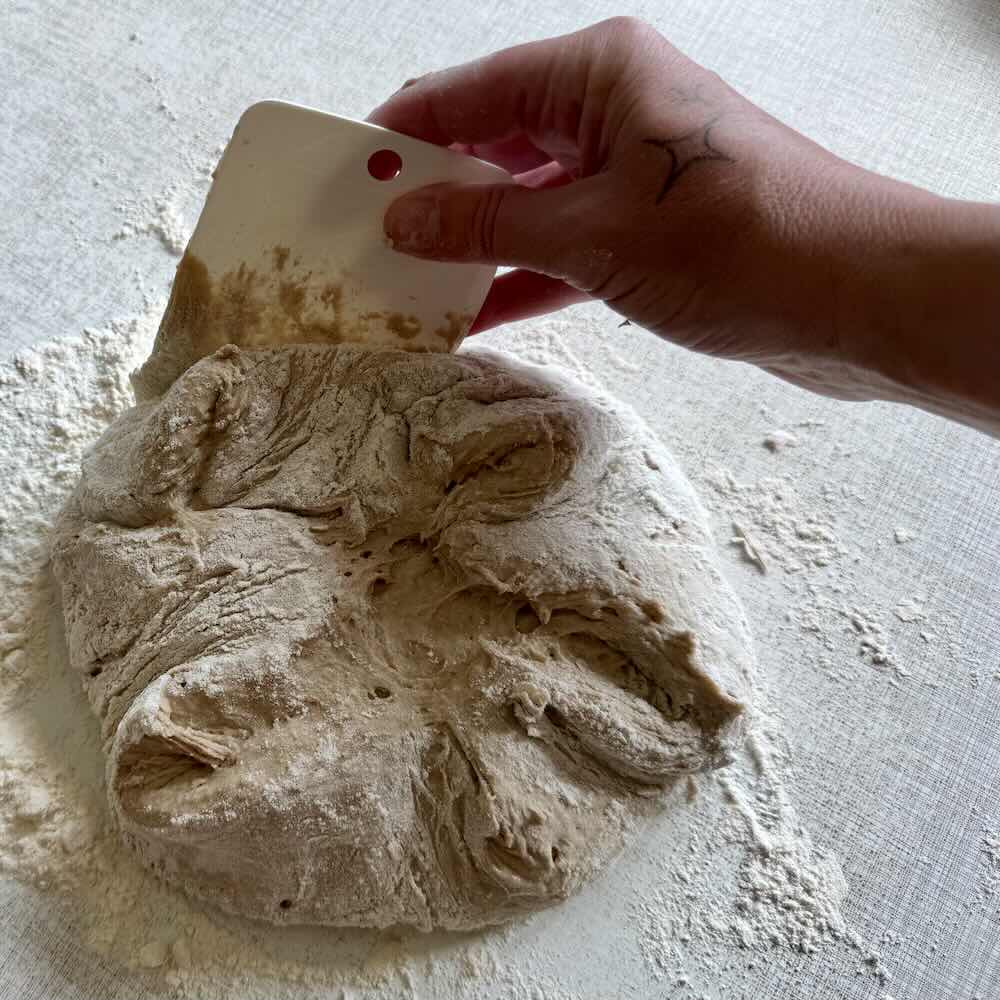
6. Turn out the dough
Once the dough has increased in volume by just under half, use a dough scraper to ease it onto a well-floured work surface.
7. Shape into a round
Fold one side of the dough towards the centre, then repeat with the other three sides. This smooths the outside and creates a seam at the top centre where the folded edges meet.
8. Place in a proving basket
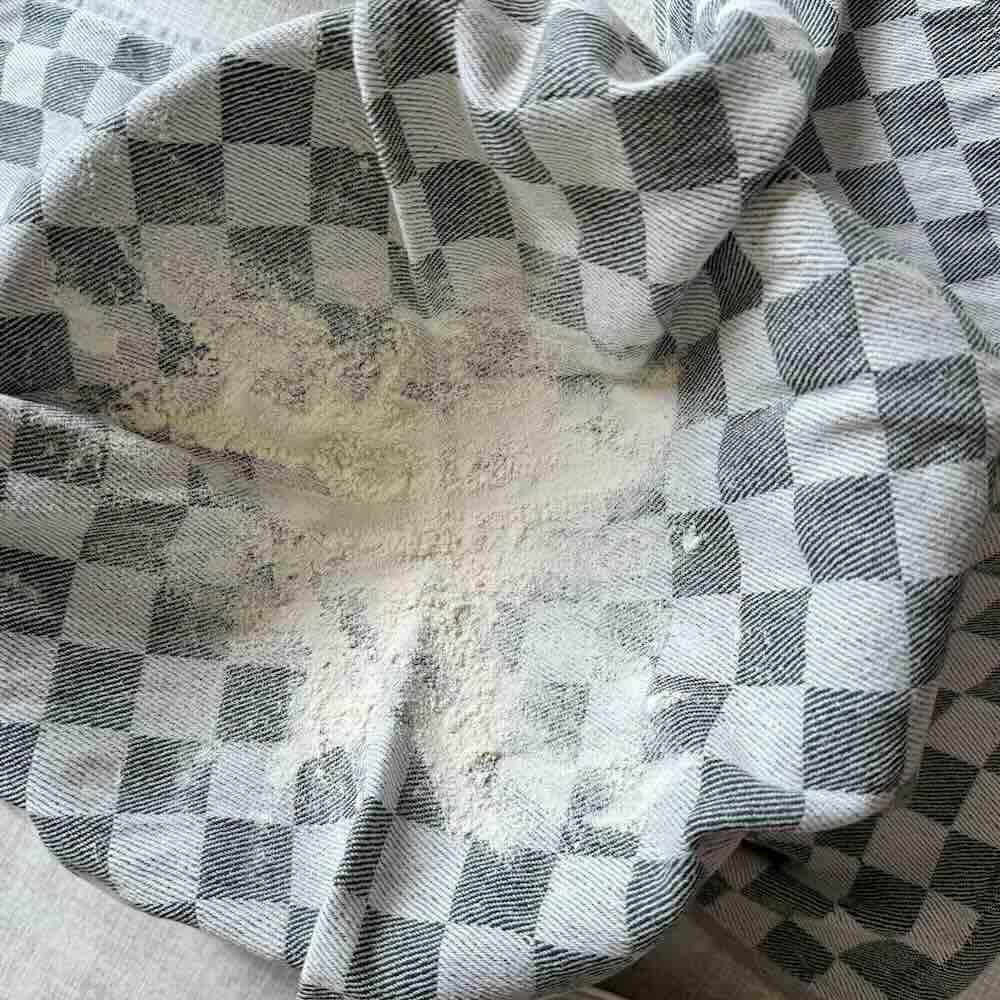
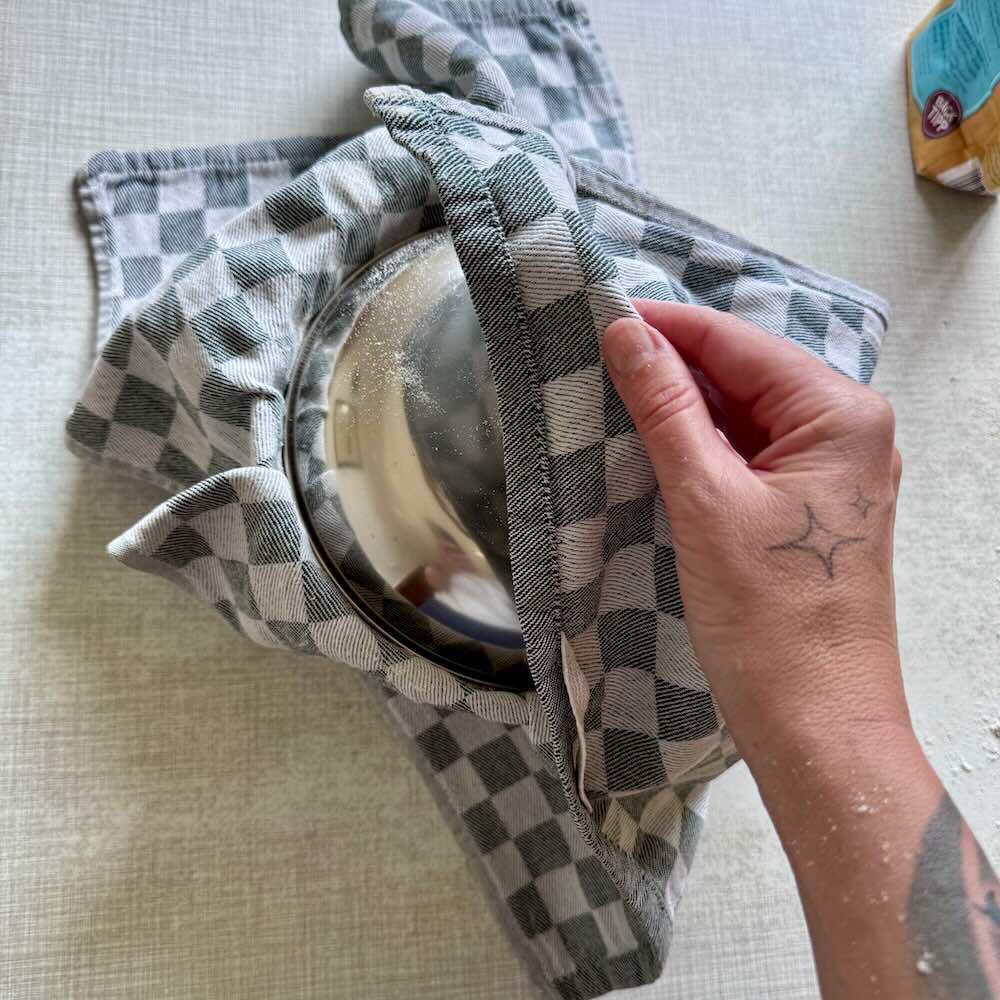
Place the dough seam-side down in a well-floured round proving basket. Alternatively, line a kitchen sieve with a clean cotton or linen tea towel and lightly flour the cloth. Place the dough inside and cover, for example with the towel ends and a bowl cover or bowl. Prove for 75 minutes at room temperature (20–22 °C).

9. Preheat the oven
During the final prove, preheat the oven and a cast-iron pot with its lid to 250 °C conventional heat, allowing the pot to heat through fully. Follow the manufacturer’s instructions: the pot, lid and handles must all be suitable for this temperature.
10. Bake the bread
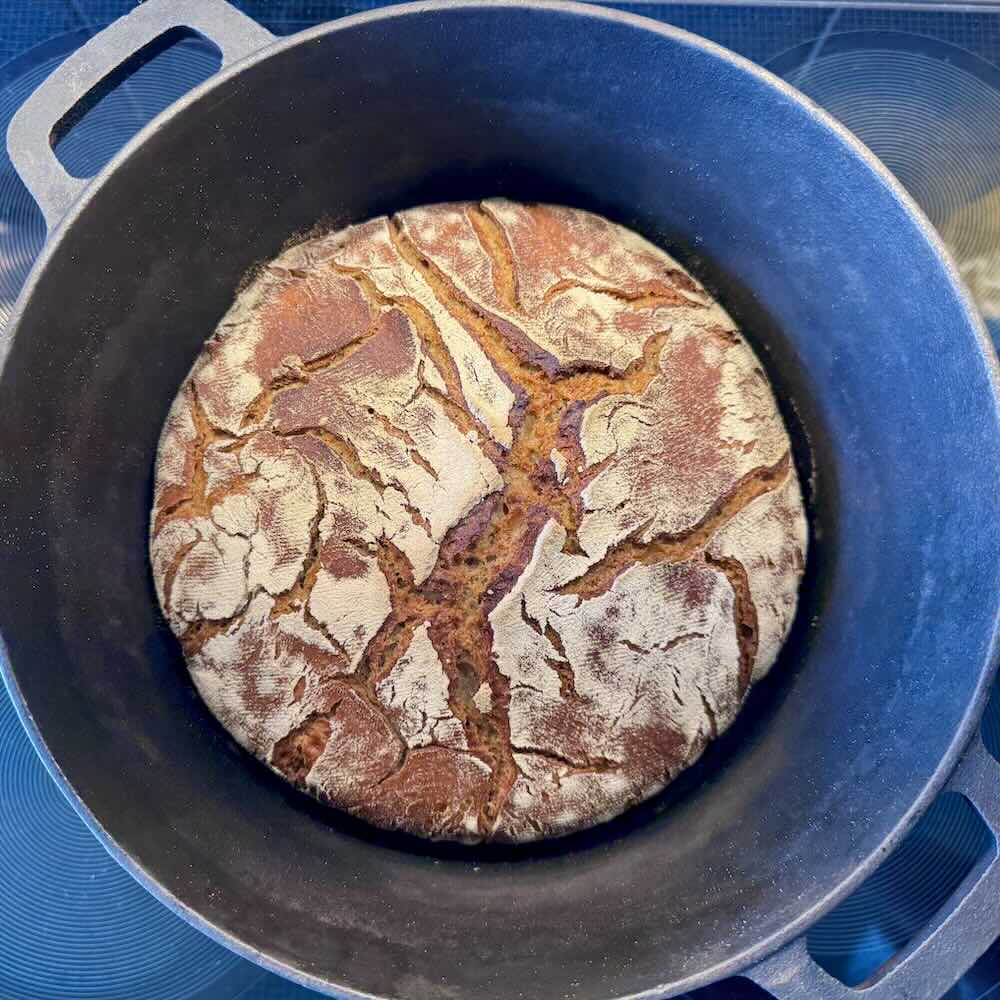
Once the dough has increased in volume by at least about half, carefully tip it into the hot pot seam-side up. Use oven gloves. Put the lid on, reduce the temperature to 230 °C and bake for 45 minutes. Remove the lid and bake for another 15 minutes, until the crust is a deep brown.
11. Leave to cool
Lift the bread out of the pot and leave it to cool on a wire rack. Of course, it tastes especially good while still warm – just bear in mind that it may not slice quite as neatly then.
Tips & notes
What your dough should feel like: The wholemeal wheat and rye make this dough tougher, stickier and more compact than many standard yeast doughs or shortcrust pastry. It will not become as smooth and supple – that is normal and does not mean anything has gone wrong. Working by hand is often easier than using a mixer. A dough scraper helps with moving it.
Without a cast-iron pot: Other lidded vessels rated for 250 °C, such as a cast-iron or enamelled cast-iron casserole, can also work. Alternatively, bake on a thoroughly preheated pizza stone, baking steel or cast-iron plate. Place a metal dish suitable for high temperatures containing hot water in the oven to create steam (avoid glass and take care with hot steam). After 45 minutes, carefully remove the water dish and bake for another 15 minutes without steam. Keep an eye on the crust colour; results may vary with the equipment.
Serving suggestion

Vegetable Goulash with Spiced Tofu Balls
This hearty bread is a lovely match for rich vegetable dishes and stews. Try it with our aromatic vegetable goulash and use a slice to mop up every last bit of the delicious sauce.